A little eye discharge can happen to cats, especially after sleeping. You may notice a small amount of dried material around the corners of your cat’s eyes, and in many cases, gently cleaning the area is all that is needed.
The important part is knowing how to clean cat eyes without irritating them. A cat’s eyes are sensitive, so rough wiping, dirty materials, or unsuitable products can cause more problems instead of solving them.
This guide explains how to clean your cat’s eyes safely, what you can use, what to avoid, and when eye discharge may be a sign that your cat needs veterinary attention.
Is It Normal for Cats to Have Eye Discharge?
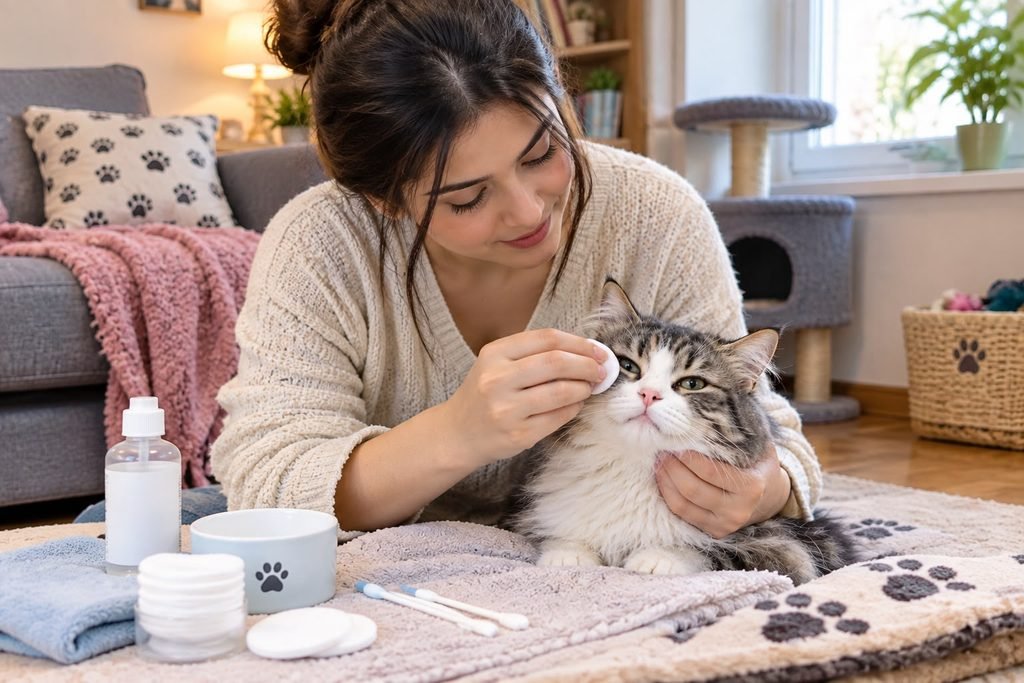
A small amount of clear or slightly crusty material around the eyes can sometimes be normal. Cats naturally produce tears that keep the surface of the eye moist. Dust and other small particles can also collect around the corners.
However, frequent or excessive discharge deserves more attention.
If the discharge is thick, yellow, green, bloody, or accompanied by redness, swelling, squinting, cloudiness, or obvious discomfort, cleaning alone may not solve the underlying problem.
Eye discharge can occur with several conditions, including irritation, infections, allergies, blocked tear drainage, and injuries. Because different eye problems can look similar at first, it is better not to assume that every case is simply dirt.
What You Need to Clean Your Cat’s Eyes
Before starting, prepare everything you need so you do not have to leave your cat halfway through the process.
You can use:
- A soft, clean cloth or sterile cotton pad
- Lukewarm water
- A clean towel if your cat needs gentle restraint
- A veterinarian-recommended sterile eye-cleaning solution when appropriate
Use a fresh piece of material for each eye. This helps prevent material from one eye being transferred to the other.
If your veterinarian has recommended a particular eye wash or medication, follow the instructions they provided rather than replacing it with a homemade remedy.
How to Clean Cat Eyes Safely
1. Choose a Calm Place
Start somewhere quiet where your cat feels comfortable. If your cat is already frightened, trying to clean the eyes immediately may turn the process into a struggle.
Let your cat settle down first. You can gently stroke the head or offer a favorite treat if that helps your cat relax.
You do not need to force the cat into a position that makes it uncomfortable.
2. Wash Your Hands
Clean your hands before touching your cat’s face.
This is a simple step, but it matters because your hands can carry dirt, oils, or other material toward the sensitive eye area.
If you are cleaning both eyes, keep the materials for each eye separate.
3. Soften Any Dried Discharge
Do not pull hard on dried material.
Instead, moisten a soft, clean cloth or cotton pad with lukewarm water and gently hold it against the crust for a short time. The moisture can help soften the material so it comes away more easily.
The goal is to loosen the discharge, not scrub it off.
4. Wipe Gently
Once the discharge has softened, gently wipe the area around the eye.
Use a light touch and avoid pressing on the eyeball. A single gentle pass is better than repeatedly rubbing the same area.
If more cleaning is needed, use a fresh portion of the cloth or a new pad.
5. Use a Fresh Pad for the Other Eye
If both eyes need cleaning, use separate clean materials.
Do not use the same dirty cotton pad or cloth from one eye on the other. This is particularly important when your cat has noticeable discharge or a possible eye infection.
6. Dry the Fur Around the Eye
After cleaning, gently pat the surrounding fur dry with a clean, soft material.
Avoid rubbing the skin. The area around the eyes can become irritated when it stays wet or is repeatedly rubbed.
If your cat has long facial hair, regular grooming may also help prevent hair and debris from collecting around the eyes. However, trimming hair close to the eye should be done carefully, and professional grooming may be safer for a nervous cat.
What Should You Not Use on Your Cat’s Eyes?
One of the biggest mistakes cat owners can make is reaching for a household product without checking whether it is safe around the eyes.
Avoid using:
- Hydrogen peroxide
- Alcohol
- Perfumed products
- Essential oils
- Harsh soaps
- Disinfectants
- Medications for the human eye unless specifically recommended by your veterinarian
- Unverified home remedies
The eye is delicate, and a substance that seems harmless on the skin can be damaging when it reaches the eye.
Do not put anything directly into your cat’s eye unless it is intended for ocular use and is appropriate for your cat. When in doubt, ask your veterinarian before using a product.
How Often Should You Clean Your Cat’s Eyes?
There is no single cleaning schedule that is right for every cat.
A cat with healthy, clear eyes may not need routine cleaning at all. You may only need to gently remove a small amount of dried material when you notice it.
Some cats, particularly those with facial structures that affect tear drainage, may develop more visible staining or moisture around the eyes. These cats may need more regular facial cleaning, but persistent tearing should still be discussed with a veterinarian.
If you find yourself cleaning your cat’s eyes repeatedly every day because discharge quickly returns, do not simply keep increasing the cleaning. Try to find out why the discharge is happening.
When Is Eye Discharge a Warning Sign?
Cleaning is appropriate for removing mild surface discharge, but it should not be used to hide symptoms of an eye problem.
Contact your veterinarian if you notice:
- Thick yellow or green discharge
- Persistent watery eyes
- Redness or swelling
- Frequent squinting
- Keeping one eye closed
- Pawing or rubbing at the eye
- Cloudiness on the surface of the eye
- A visible change in the eye’s appearance
- Sensitivity to light
- Swelling around the eye
- Blood or unusual fluid
- Discharge that keeps returning
- Eye problems accompanied by sneezing, nasal discharge, poor appetite, or unusual tiredness
Some eye conditions can become serious without appropriate treatment. Scratches and corneal ulcers, for example, may cause discomfort and can threaten vision if they become severe.
If your cat appears to be in significant pain or the eye suddenly looks very different, seek veterinary care promptly rather than trying repeated home cleaning.
Can You Clean an Infected Cat’s Eye at Home?
You can gently remove discharge from around the eye, but cleaning does not necessarily treat an infection.
This distinction is important.
An eye that looks dirty may actually have an underlying condition. A veterinarian may need to examine the eye to determine the cause and decide whether treatment is necessary.
Never assume that an antibiotic eye medication or another treatment that worked for a different cat will be safe for your cat. Eye problems have different causes, and using the wrong medication can delay appropriate treatment.
Home cleaning should be considered basic hygiene, not a replacement for veterinary diagnosis.
Common Mistakes Cat Owners Make
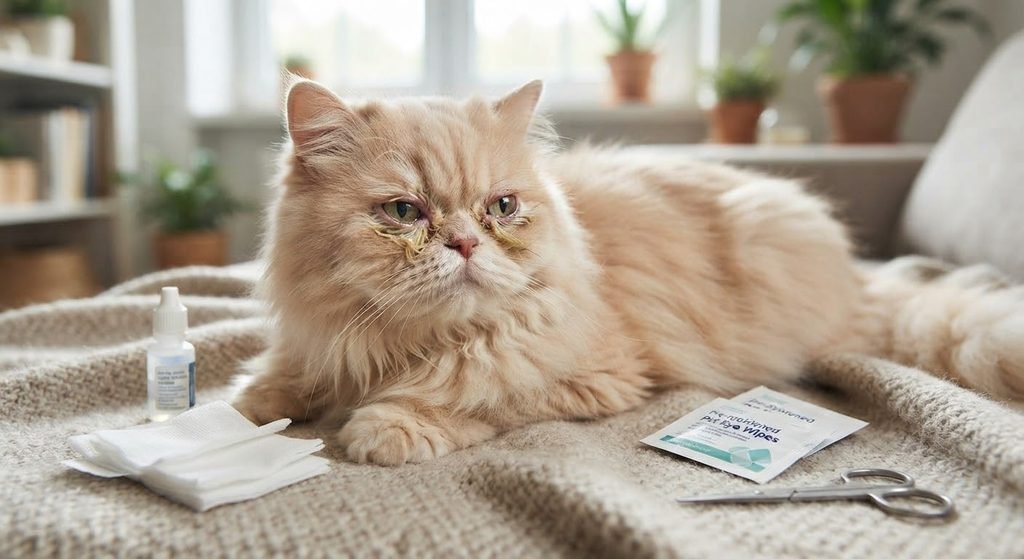
Rubbing the Eye
Scrubbing can irritate already-sensitive tissues. Always use gentle movements.
Using the Same Material for Both Eyes
If one eye has a problem, using the same dirty pad on both eyes is poor hygiene. Use separate clean materials.
Pulling Off Hard Crusts
Never force dried discharge away. Soften it first.
Using Random Household Products
Products designed for floors, skin, hair, or general cleaning do not belong in or around your cat’s eyes.
Ignoring Repeated Discharge
If the same problem keeps coming back, cleaning may only be dealing with the visible symptom. Your cat may need an examination to identify the underlying cause.
How to Make Eye Cleaning Easier
If your cat dislikes having its face touched, take things slowly.
Start by gently touching the side of the face without cleaning anything. Reward calm behavior. Once your cat becomes comfortable, introduce the soft cloth and allow your cat to sniff it.
Keep each cleaning session short.
If your cat becomes highly stressed or tries to scratch and bite, do not turn the process into a physical battle. Your veterinarian or a professional groomer may be able to help, depending on the situation.
Frequently Asked Questions
Can I use water to clean my cat’s eyes?
For mild external discharge, a clean soft cloth or cotton pad moistened with lukewarm water can be used to gently clean around the eye. Avoid rubbing the eyeball.
Should I clean both of my cat’s eyes?
If both eyes have discharge, clean them separately using fresh material for each eye. This is better hygiene than using the same pad repeatedly.
Why does my cat keep getting eye discharge?
Repeated discharge can have several possible causes, including irritation, tear-drainage problems, infection, or other eye conditions. If it keeps returning, ask your veterinarian to examine your cat.
Can I use human eye drops on my cat?
Do not use human eye drops unless your veterinarian has specifically told you to use a particular product. Some eye medications are not appropriate for cats.
When should I take my cat to the vet?
Seek veterinary advice when discharge is persistent, thick, yellow or green, or when it occurs with redness, swelling, squinting, pain, cloudiness, or other changes in the eye.
Final Thoughts
Learning how to clean cat eyes is fairly simple when the problem is only a small amount of surface discharge. The safest approach is gentle cleaning with clean materials, avoiding harsh products, and paying attention to changes in your cat’s eyes.
The bigger lesson is not to treat every discharge as ordinary dirt. Healthy cat eyes should generally look clear and comfortable. If your cat develops persistent discharge, redness, squinting, swelling, cloudiness, or obvious pain, cleaning the eye is not enough. A veterinarian should assess the problem and determine what treatment, if any, is needed.
Good eye care is less about cleaning frequently and more about knowing what is normal for your cat and noticing when something changes.