A cat can spend a surprising amount of time grooming itself, but that does not mean it never needs help. Regular grooming removes loose hair, dirt, and debris while giving you an opportunity to notice changes in the skin or coat.
The right routine depends on your cat. A short-haired indoor cat may need much less brushing than a long-haired cat that develops tangles easily. Age, coat condition, lifestyle, and how comfortable your cat is with grooming can also affect the routine.
If you want to know how to care for cat hair, start with one simple habit: regular, gentle brushing.
Why Is Cat Hair Care Important?
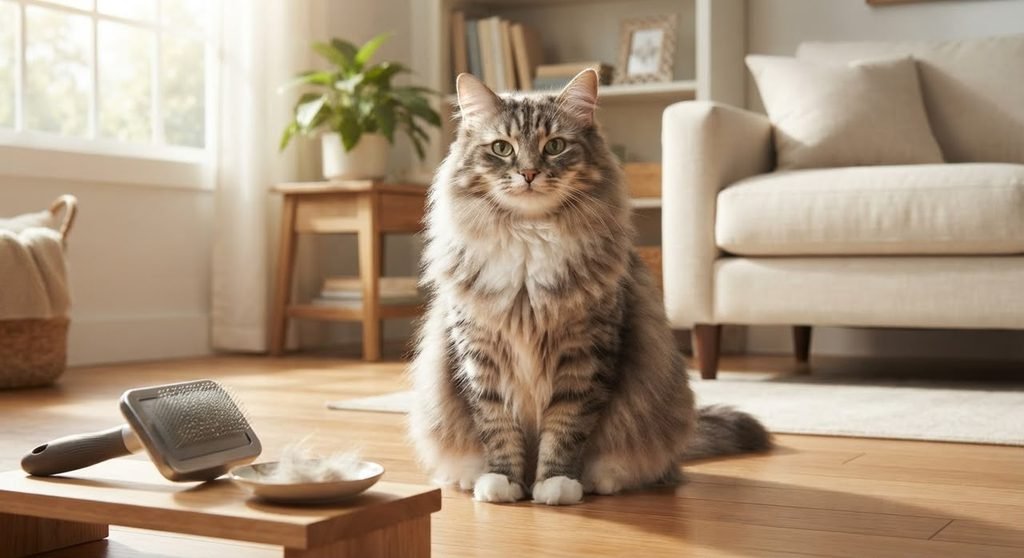
Regular grooming does more than make your cat look neat. Brushing helps remove loose hairs and dead skin cells and can help keep the coat free from dirt and tangles. It also spreads natural oils through the hair, supporting a healthy-looking coat.
There is another benefit: your cat swallows some loose hair while grooming itself. Removing loose fur with a brush can reduce the amount of hair your cat ingests and may help reduce hairballs.
Grooming also gives you a chance to look closely at your cat’s skin. Changes such as unusual bumps, parasites, irritation, excessive dandruff, or areas of sensitivity may be easier to notice during regular grooming.
How Often Should You Groom a Cat?
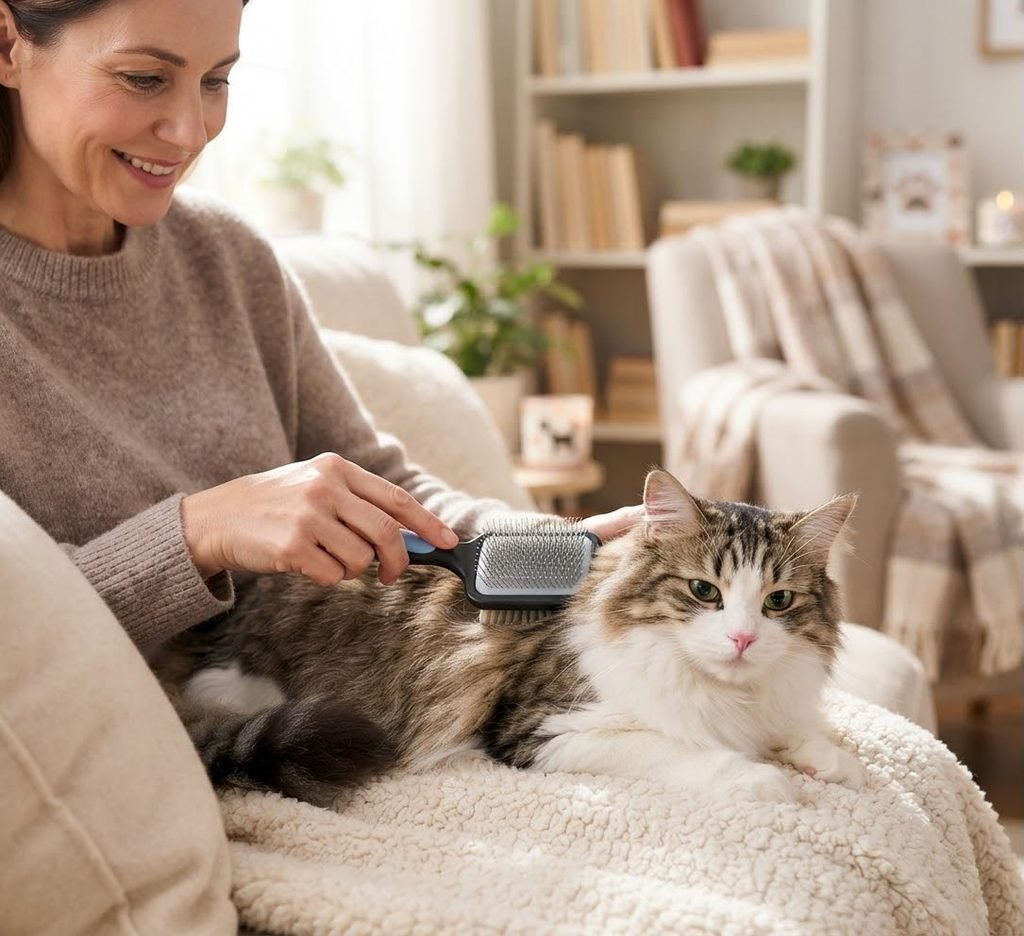
There is no single schedule that works for every cat.
Long-haired, silky, or curly-coated cats generally need more frequent brushing because their hair can become tangled or matted. Daily brushing may be appropriate for these cats. Short-haired cats usually need less frequent brushing, although regular grooming is still beneficial.
A simple starting point is:
- Short-haired cat: brush regularly, adjusting the frequency according to shedding and coat condition.
- Medium-haired cat: brush several times a week and check for tangles.
- Long-haired cat: often needs daily brushing to prevent mats.
- Cats with existing mats: inspect the coat closely and seek professional help when mats are extensive or difficult to remove.
Check areas that are easy to miss, particularly behind the ears, under the front legs, around the groin, and along the back of the legs.
How to Brush Cat Hair Properly
If your cat is not used to grooming, do not try to complete a long brushing session immediately. Start slowly and make the experience as calm as possible.
1. Choose a quiet time
Pick a moment when your cat is relaxed rather than excited or ready to play.
2. Start with gentle strokes
Begin with a few gentle strokes in an area your cat already enjoys being touched. Stop before your cat becomes irritated.
3. Work through the coat gradually
Move through the coat carefully rather than repeatedly brushing the same area. Pay extra attention to places where loose hair tends to collect.
4. Check for tangles
If you find a small tangle, work on it gently instead of pulling hard. Excessive pulling can hurt your cat and may make future grooming sessions more difficult.
5. Keep sessions manageable
Several short sessions can be more useful than forcing one long session. The goal is to create a routine your cat can tolerate comfortably.
Regular brushing is also easier to establish when cats become accustomed to it while young.
Which Brush Should You Use?
The best grooming tool depends on the type of coat your cat has.
For short coats, a soft or stiff-bristle brush may help remove loose hair. For medium- and long-haired cats, a long-toothed metal comb or suitable grooming brush can help work through loose fur and minor tangles.
You do not necessarily need a large collection of grooming tools. Choose something appropriate for your cat’s coat and learn how to use it gently.
If you are unsure which tool is suitable, your veterinarian or professional groomer can help you choose one based on your cat’s coat.
Cat Hair Care for Short-Haired vs. Long-Haired Cats
The biggest difference is usually the amount of maintenance needed to prevent tangles.
Short-haired cats typically have coats that are easier to maintain. Regular brushing can still remove loose hair and help you monitor the skin.
Long-haired cats require more attention because loose hair can form tangles and mats. Areas behind the ears, under the legs, and around the back of the body can be particularly troublesome.
A long-haired cat should not automatically be shaved simply because the weather is warm. Most cats, including long-haired cats, can manage normal summer temperatures without needing a haircut. If severe mats develop, however, professional grooming may be necessary.
What Should You Do About Matted Cat Hair?
Small tangles may sometimes be gently worked out with an appropriate comb or brush. Do not aggressively pull at a mat.
Large, tight, or widespread mats are different. They can be uncomfortable and may be associated with irritated skin underneath. Extensive matting is a good reason to contact a professional groomer or veterinarian.
Never use ordinary scissors to cut mats close to your cat’s skin. A cat’s skin can easily be caught in the mat, creating a risk of injury. VCA specifically recommends clippers rather than scissors when mats need to be removed, with professional assistance recommended for severe matting.
If the skin underneath a mat looks irritated, damaged, or painful, veterinary evaluation is appropriate.
Does Your Cat Need a Bath?
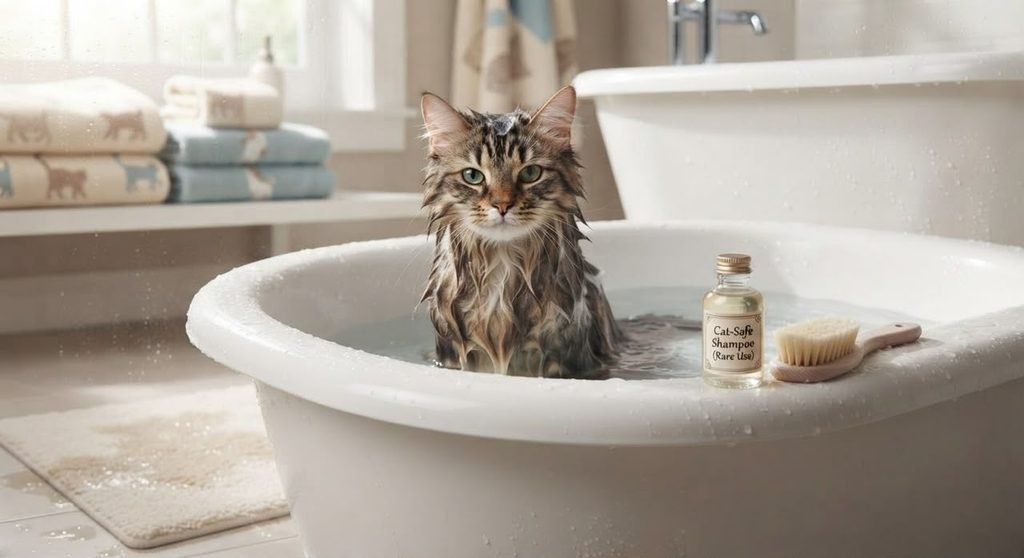
Usually, healthy adult cats do a good job of keeping themselves clean, so routine bathing is not necessary for every cat. How often a cat needs a bath depends on factors such as age, lifestyle, health, and its ability to groom itself.
A bath may occasionally be necessary when a cat becomes unusually dirty or cannot groom itself properly. Cats with certain skin conditions may also receive bathing recommendations from a veterinarian.
If you do bathe your cat, remove tangles before bathing because wetting a tangled coat can make mats harder to deal with. Make sure grooming products are thoroughly rinsed from the coat.
Avoid bathing your cat simply because you think every cat needs frequent baths.
Can Grooming Help With Hairballs?
Yes, regular brushing can help reduce the amount of loose hair your cat swallows during self-grooming. This can be particularly useful for cats with long or thick coats.
However, hairballs should not automatically be treated as just a grooming problem.
Cats can develop hairballs for different reasons, including increased grooming caused by skin problems. Frequent vomiting can also indicate an underlying issue that needs veterinary attention.
If your cat repeatedly vomits, cannot keep food or water down, appears painful, or shows other unusual symptoms, contact a veterinarian rather than relying only on grooming or hairball products.
When Should You Ask a Veterinarian?
A change in your cat’s coat can sometimes be more than a grooming issue.
Speak with a veterinarian if you notice:
- Sudden or unusual hair loss
- Bald patches
- Persistent itching
- Significant skin irritation
- Wounds or sores
- Parasites
- Severe or widespread matting
- A sudden change in coat quality
- Excessive grooming
- Repeated vomiting or frequent hairballs
- Difficulty grooming that is new or worsening
Older or overweight cats may sometimes struggle to groom parts of their bodies effectively, so a change in grooming behavior deserves attention rather than simply being treated as a cosmetic issue.
A Simple Cat Grooming Routine
A practical routine does not have to be complicated.
Every day:
Look over your cat’s coat, especially if it is long-haired. Check common problem areas for tangles or clumps.
Several times a week:
Brush according to your cat’s coat type and shedding pattern.
During heavy shedding:
You may need to increase brushing frequency to remove more loose fur.
Regularly:
Use grooming time to notice changes in the skin, coat, or your cat’s reaction to being touched.
The best routine is one that matches your individual cat rather than following a rigid schedule.
FAQs
How often should I brush my cat’s hair?
It depends on the coat. Long-haired cats often benefit from daily brushing, while short-haired cats generally need less frequent grooming. Adjust the routine according to your cat’s shedding, coat condition, and tolerance.
How can I prevent my cat’s hair from matting?
Regular brushing is the main preventive step. Pay special attention to areas behind the ears, under the legs, around the groin, and along the back of the legs.
Should I shave my long-haired cat?
Not automatically. Most long-haired cats do not need to be shaved simply because it is hot. Severe matting or grooming difficulties may require professional clipping.
Can brushing reduce hairballs?
Regular brushing can reduce the amount of loose hair your cat swallows while grooming, which may help reduce hairballs. Frequent vomiting should still be discussed with a veterinarian.
Do cats need regular baths?
Most healthy adult cats rarely need routine baths because they groom themselves. Bathing needs vary according to the cat’s lifestyle, age, coat, and health.
What should I do if my cat has a large mat?
Do not pull aggressively or use scissors close to the skin. Large or tight mats are best handled by an experienced groomer or veterinarian, particularly if the skin underneath is irritated.
Conclusion
Good cat hair care is mostly about consistency rather than complicated grooming products. Regular brushing helps remove loose fur, reduces tangles, and gives you an opportunity to notice changes in your cat’s skin and coat.
Start with your cat’s coat type and individual needs. Short-haired cats may need a simpler routine, while long-haired cats often require more frequent brushing. Keep grooming gentle, deal with small tangles early, and get professional help when mats become severe or the coat changes unexpectedly.
A simple grooming routine can make coat maintenance easier for both you and your cat.